Satyabhama Majhi
A contemporary Indian artist based in Bhubaneswar, working across painting, sculpture, installation art and photography. Her practice examines urbanisation, regional aesthetics, community connection and the living relationship between people and land.
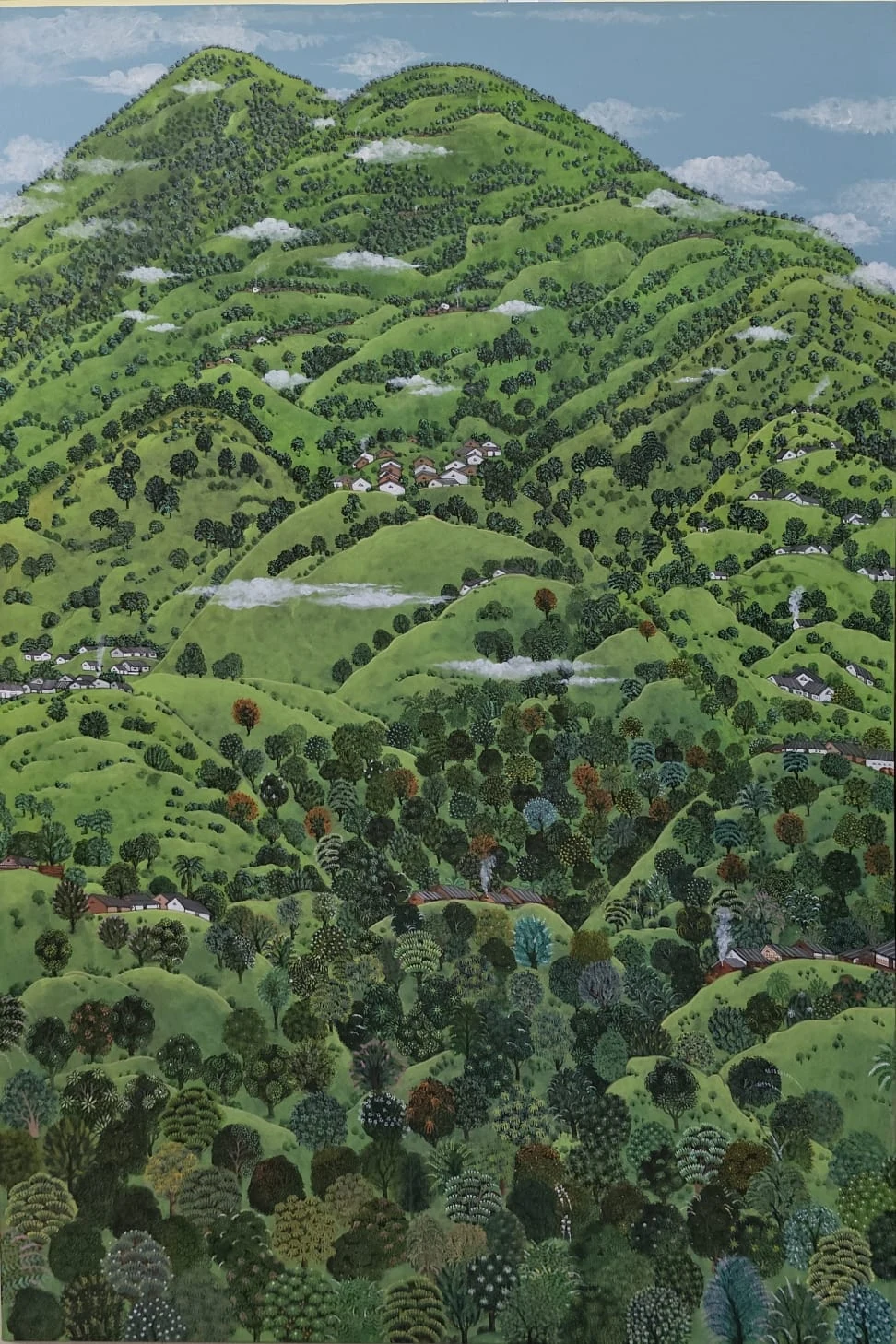

From intimate landscapes to collective life.
Majhi’s work moves between the observed world and the social world: hills, forests, markets, parks, streets, labour, gatherings and everyday gestures become dense visual fields.
Painting
↗Sculpture
↗Installation Art
↗Photography
↗Community Projects
↗Material gathered from the land itself.
Her exploration of the Dongaria Kondh community focuses on wall-painting traditions, pigment foraging and the cultural relationship with the Niyamgiri hills and Niyam Raja.
Five natural pigments became a medium rooted in place: chalk stone, charcoal, turmeric, geru soil and brown stone, mixed with glue to connect the act of painting to the landscape from which the materials came.
Read the research story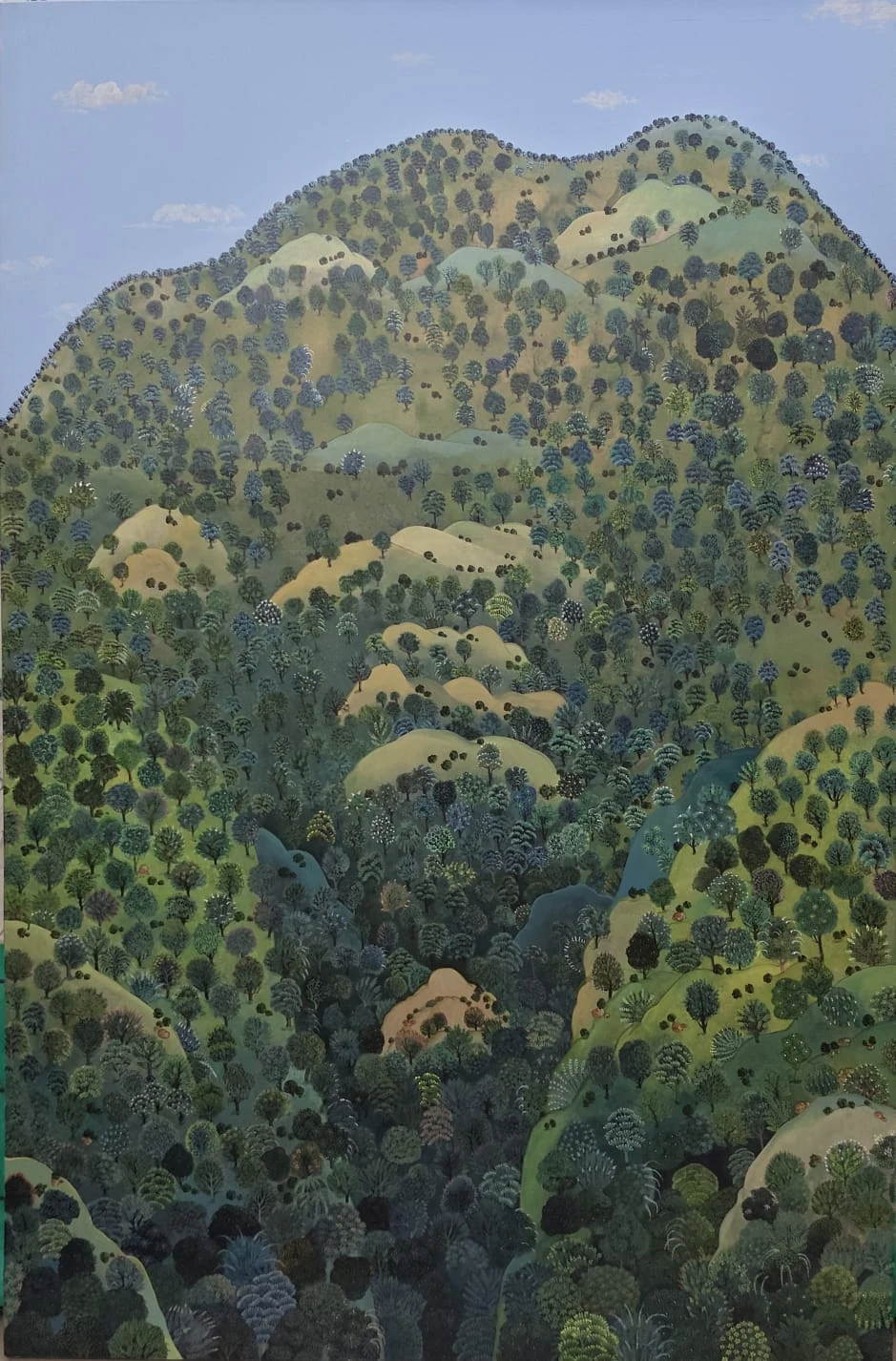
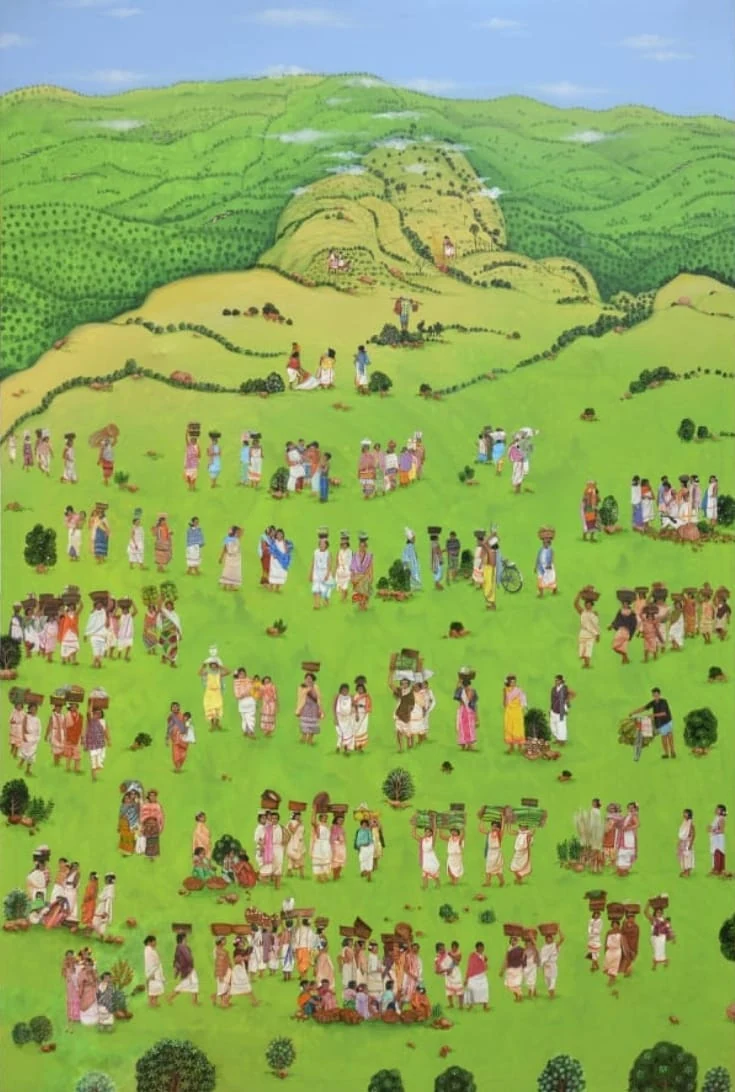
Five colours, one terrain.
The material palette reflects a process of observation, gathering and transformation rooted in the Niyamgiri region.
Landscapes of people, memory and movement.
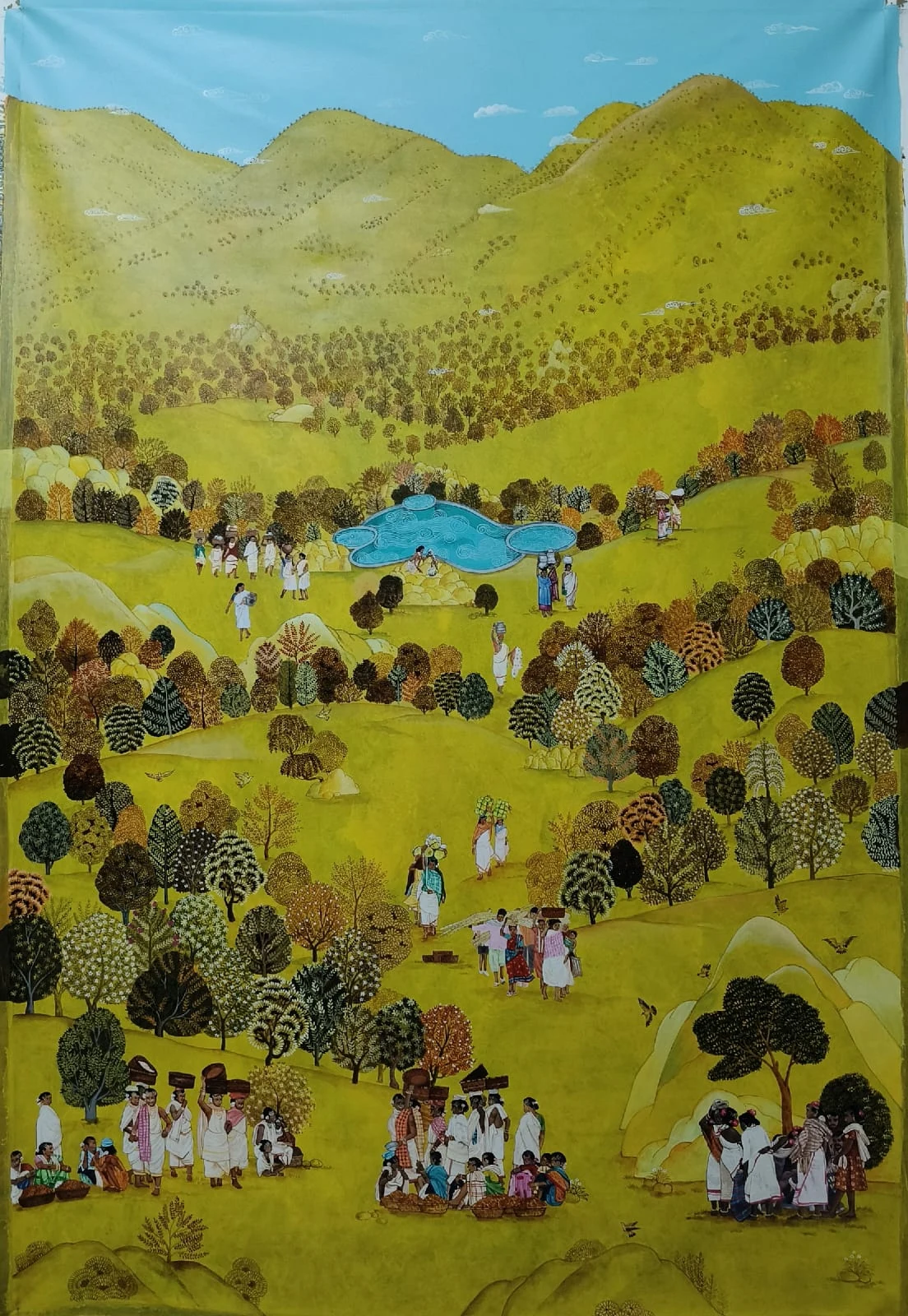
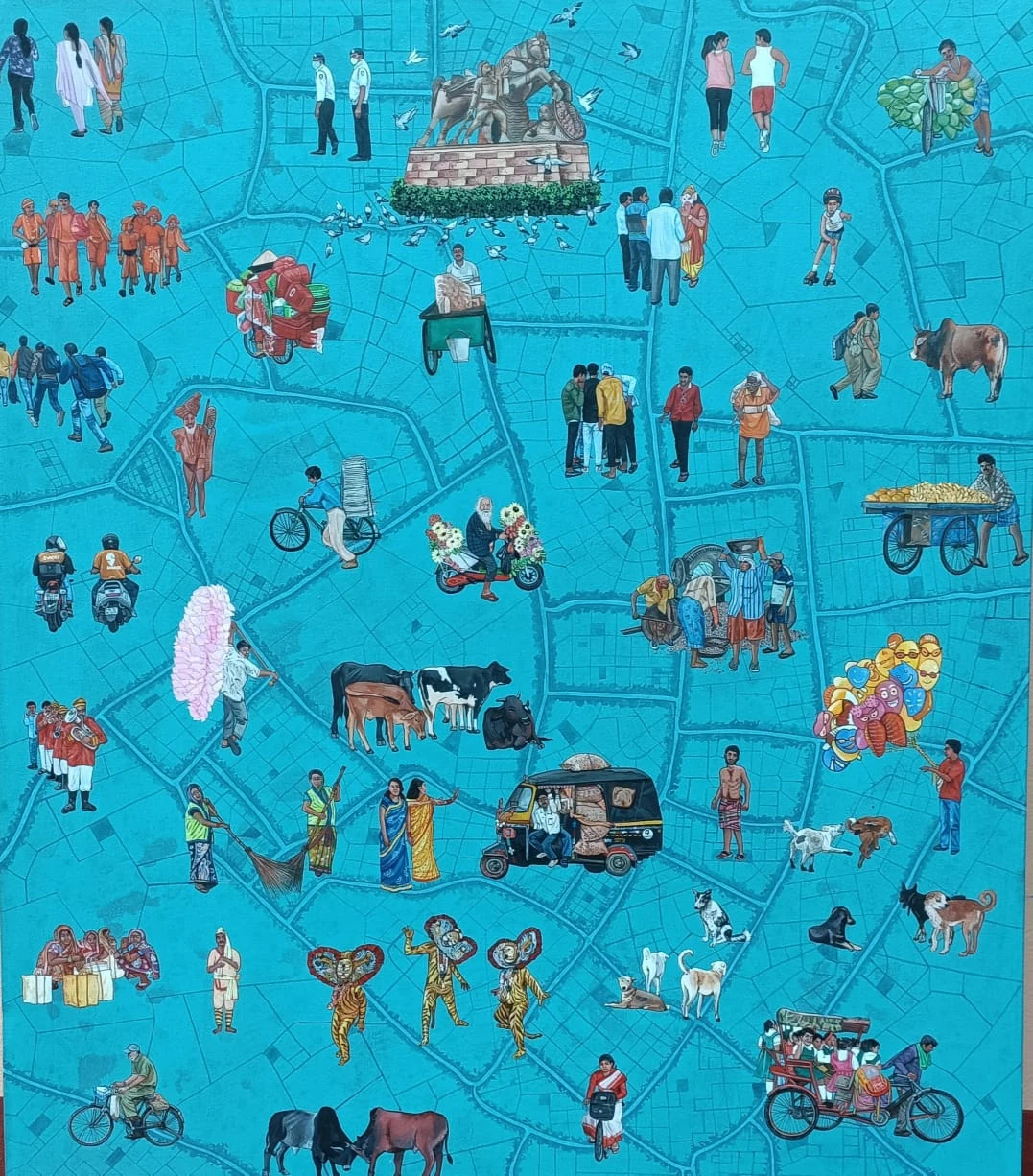
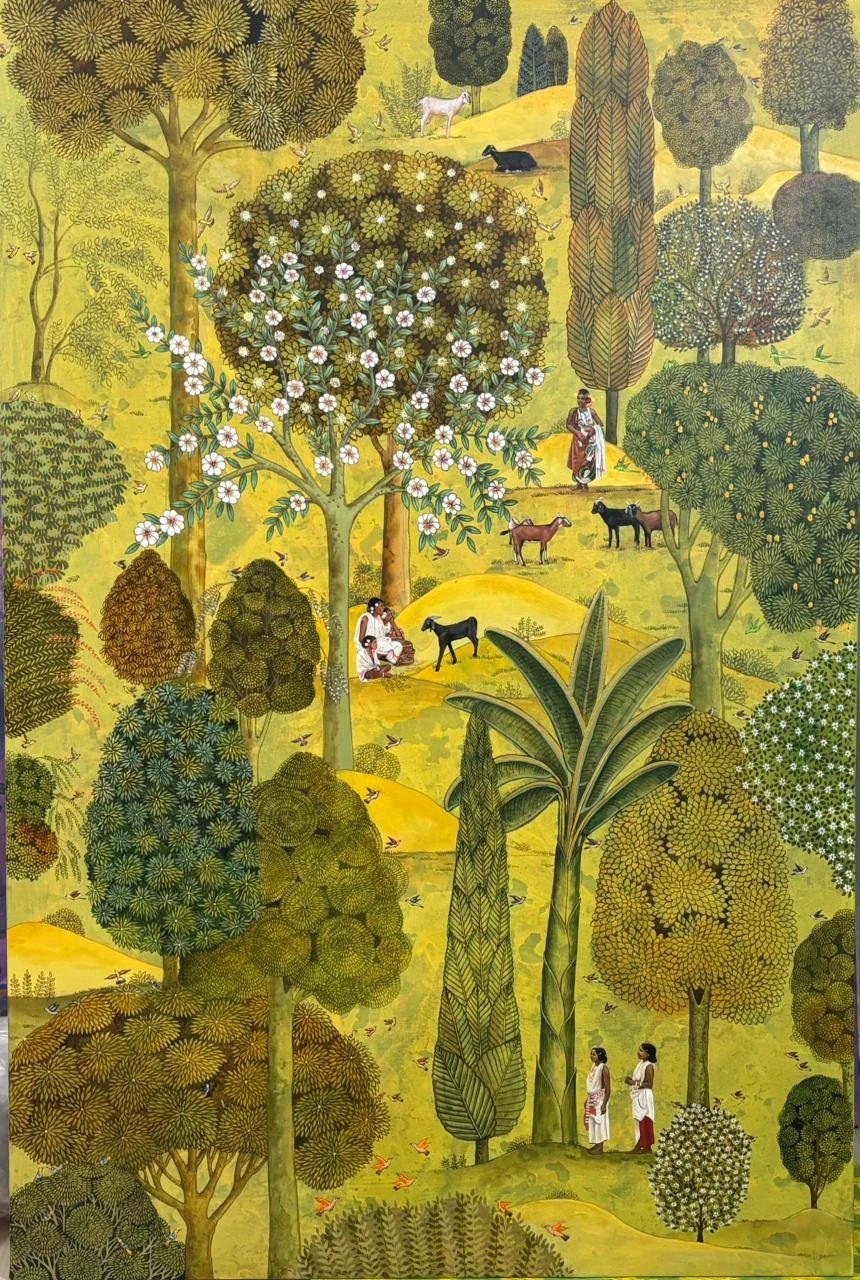
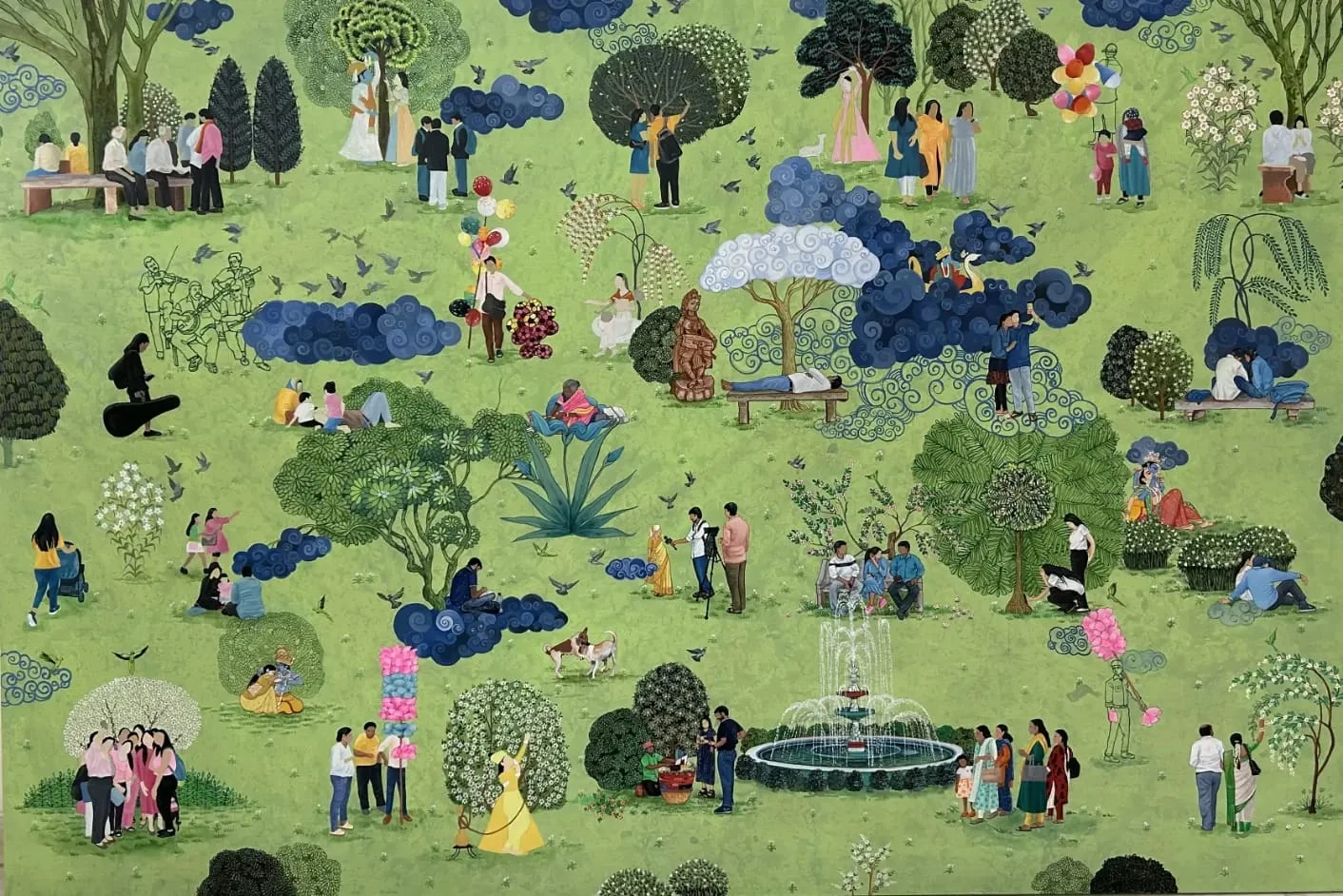
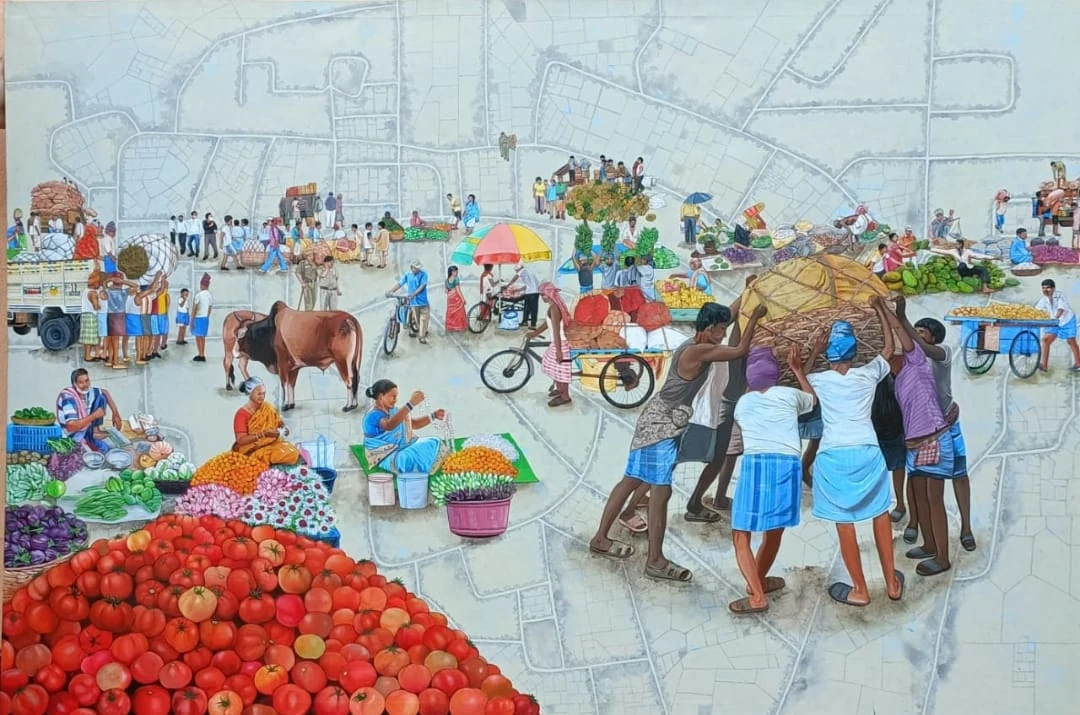
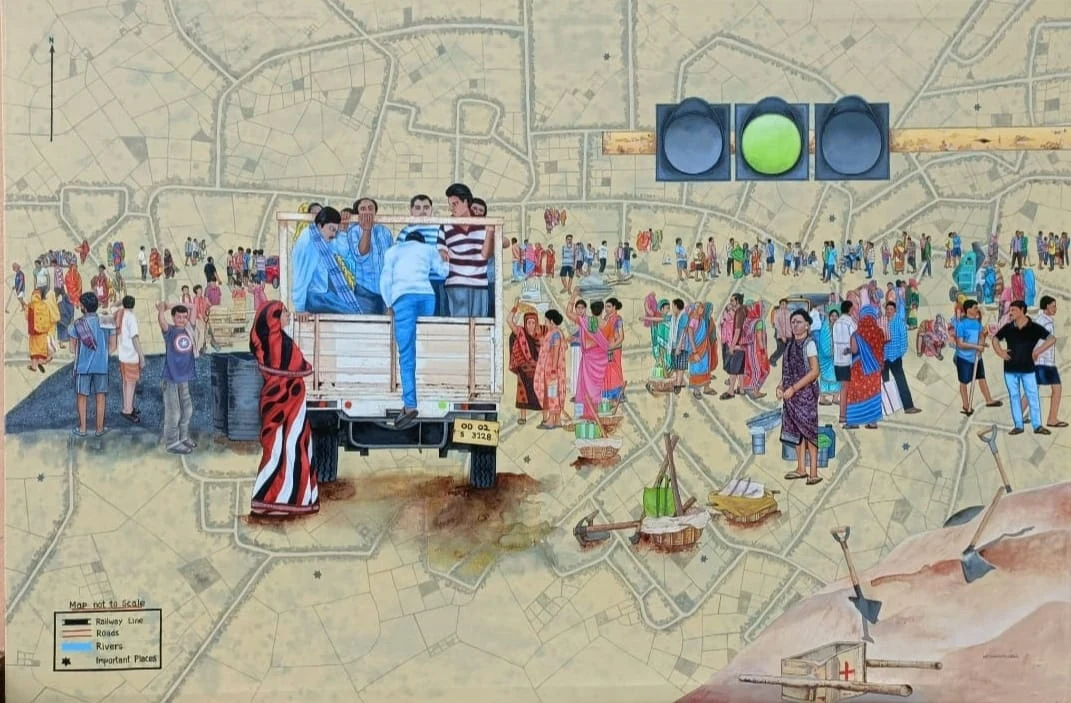
Public life, movement and labour recur as visual structures across the practice.
Art beyond the studio.
New Parliament House Initiative
Core ideator and curator for “People’s Wall - Jan, Janani and Janmabhumi” inside India’s New Parliament House, curated alongside the Lalit Kala Akademi and centered on regional aesthetics, tribal art and female artisans.
Odisha Lalit Kala Akademi State Award
Recipient of the State Award from the Odisha Lalit Kala Akademi.
Urban Beautification Murals
Curated and created major public wall murals across Odisha, including work connected to Ring Road and Dagabara Sahi in Cuttack.
Sasatwa Foundation
Serves as Secretary of the Sasatwa Foundation, an organisation focused on art and social causes.
Working with organisations including Gram Vikas and Tata Trust, Majhi has guided tribal children through creative learning initiatives such as Kalpanadham, translating daily routines and lived experience into visual expression.
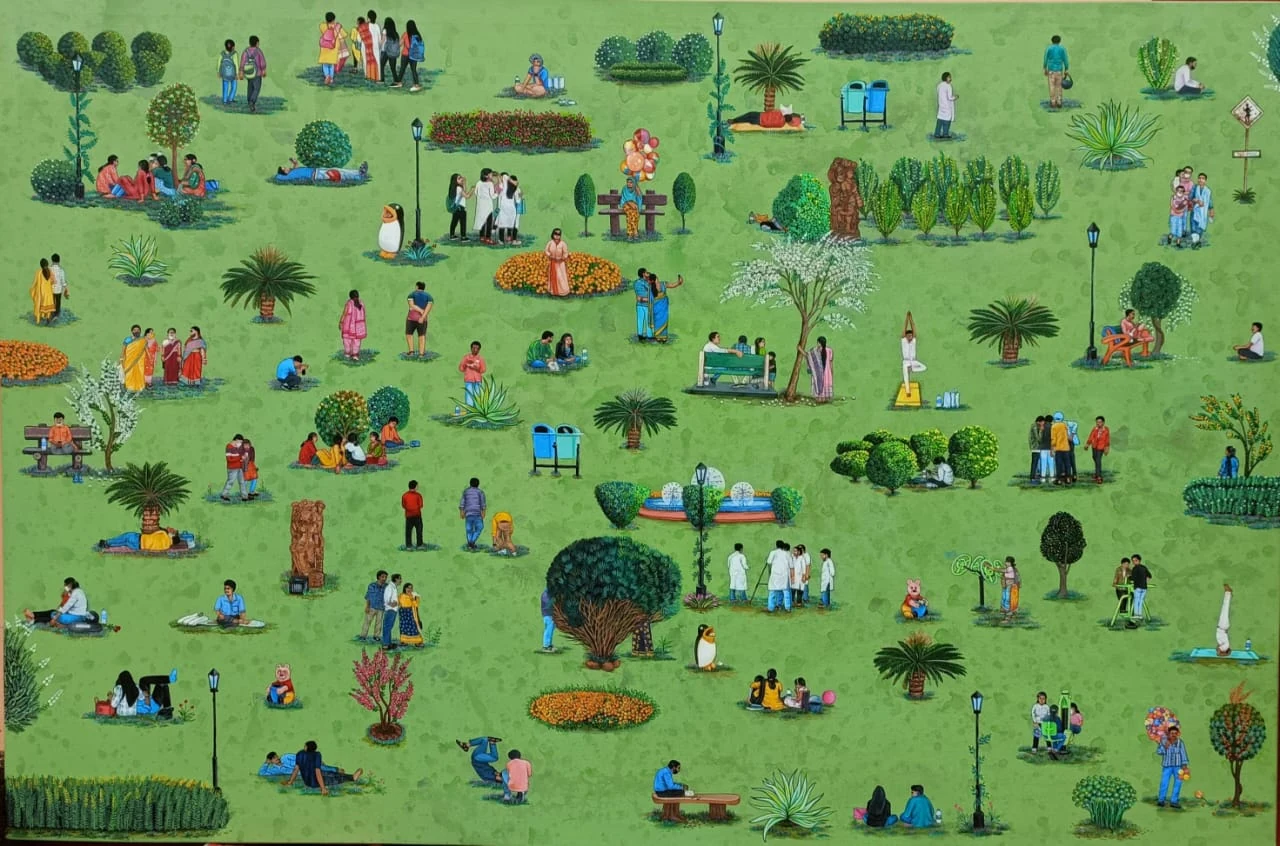
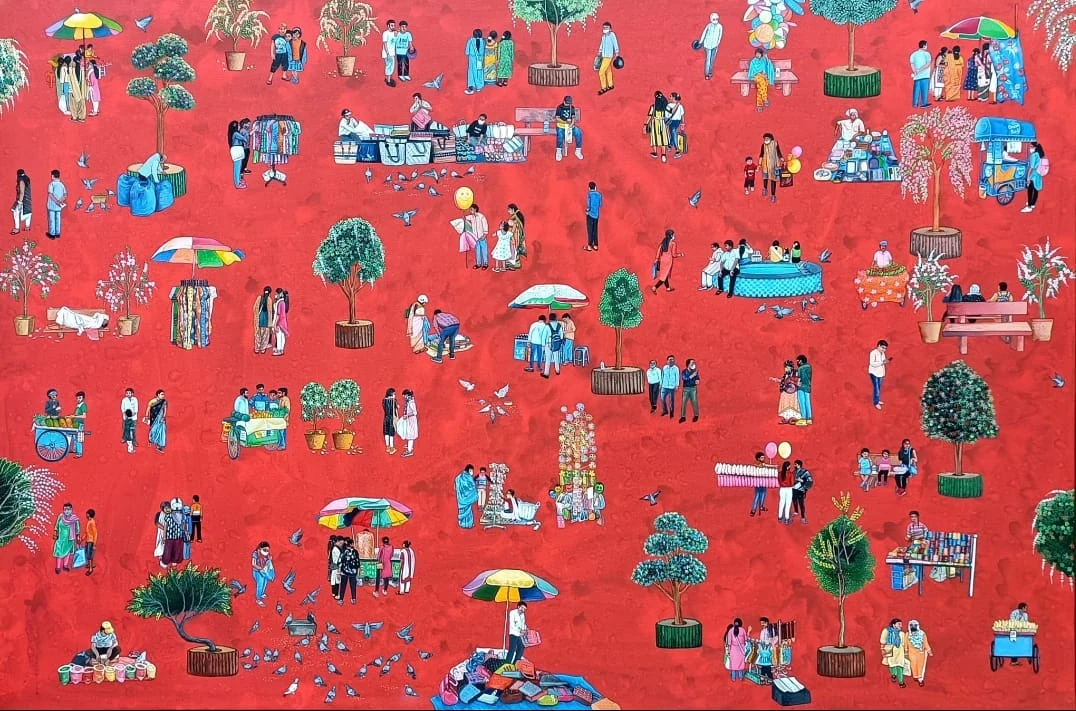
A sacred geometry of Niyamgiri.
The triangle became a central form in Majhi’s Dongaria Kondh-focused work, representing the Niyamgiri hills, stability and divinity. It offers a way to approach the community’s philosophy through its own visual symbols and traditional palette.
Explore the research